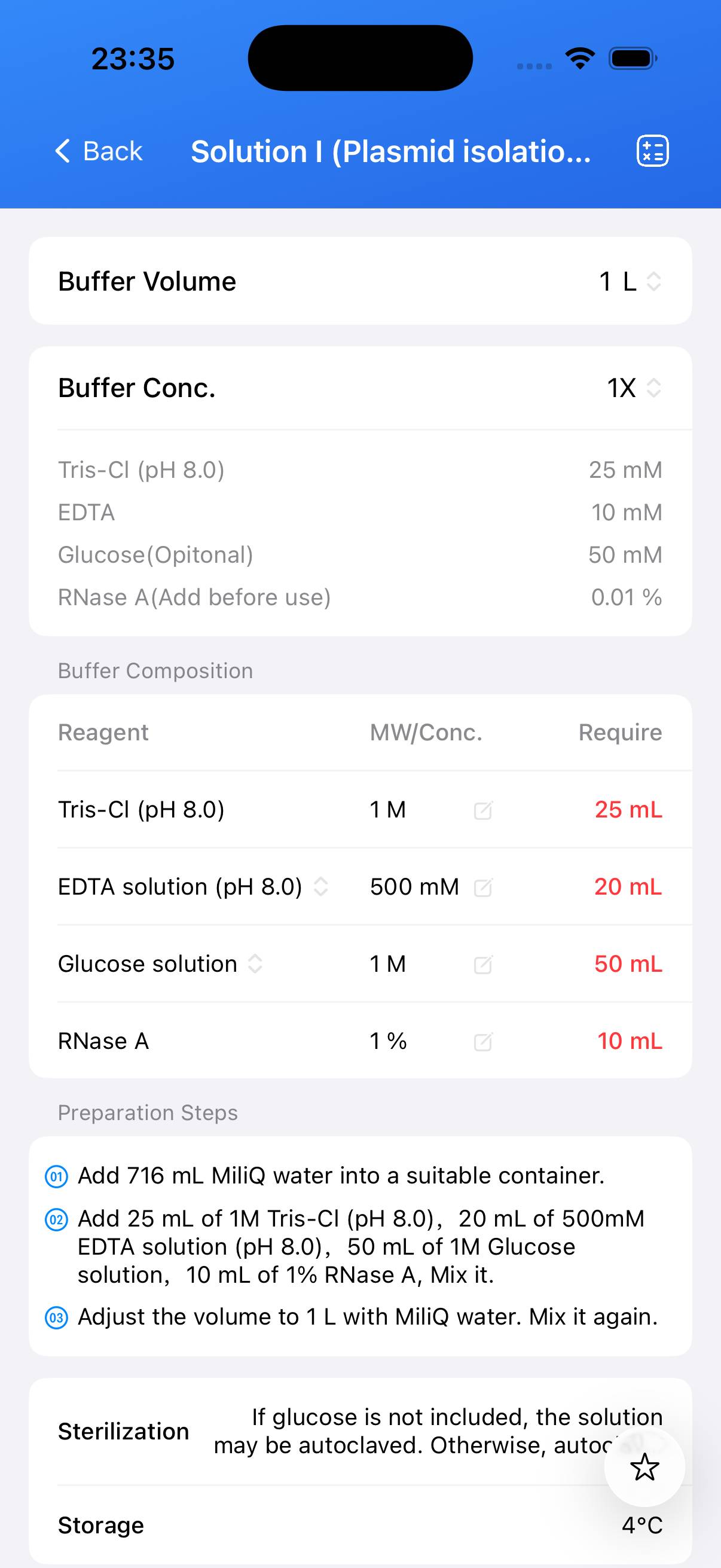
Preparation Solution I (Plasmid isolation)
This guide describes the preparation of Solution I (Plasmid isolation) at a defined molarity for laboratory use.
Solution I is used in plasmid isolation protocols to resuspend bacterial cells and protect plasmid DNA prior to alkaline lysis.
Solution I (Plasmid Isolation) – Composition
| Name | Formula | Concentration | CAS |
|---|---|---|---|
| Tris-Cl (pH 8.0) | C₄H₁₁NO₃ | 25 mM | 77-86-1 |
| EDTA | C₁₀H₁₆N₂O₈ | 10 mM | 60-00-4 |
| Glucose (Optional) | C₆H₁₂O₆ | 50 mM | 50-99-7 |
| RNase A (Add before use) | N/A | 0.01% (w/v) | 9001-99-4 |
Function of Solution I
Solution I is used to resuspend harvested bacterial cells. Tris-Cl maintains a stable pH, EDTA chelates divalent cations to inhibit DNases, glucose maintains osmotic pressure, and RNase A removes RNA contaminants.
Preparation Tips, Sterilization, and Storage
- Glucose is optional in Solution I; however, if lysozyme is added, glucose must be included.
- Buffers containing glucose are prone to bacterial growth; store properly and inspect carefully before use.
- RNase A activity decreases over time in solution; buffers containing RNase A should be stored at 4°C and used within one month.
- RNase A may be added separately immediately before use at a final concentration of 100 μg/mL.
- Sterilization: if glucose is omitted, the solution may be autoclaved; otherwise, sterilize Tris-Cl, EDTA, and glucose separately before mixing.
- Storage: 4°C.
- Most commercially available Solution I formulations do not contain glucose and typically use 50 mM Tris-Cl.
Preview